
Kaayohan Summit 2025: Centering Wellness, Welfare, and Well-being in UP
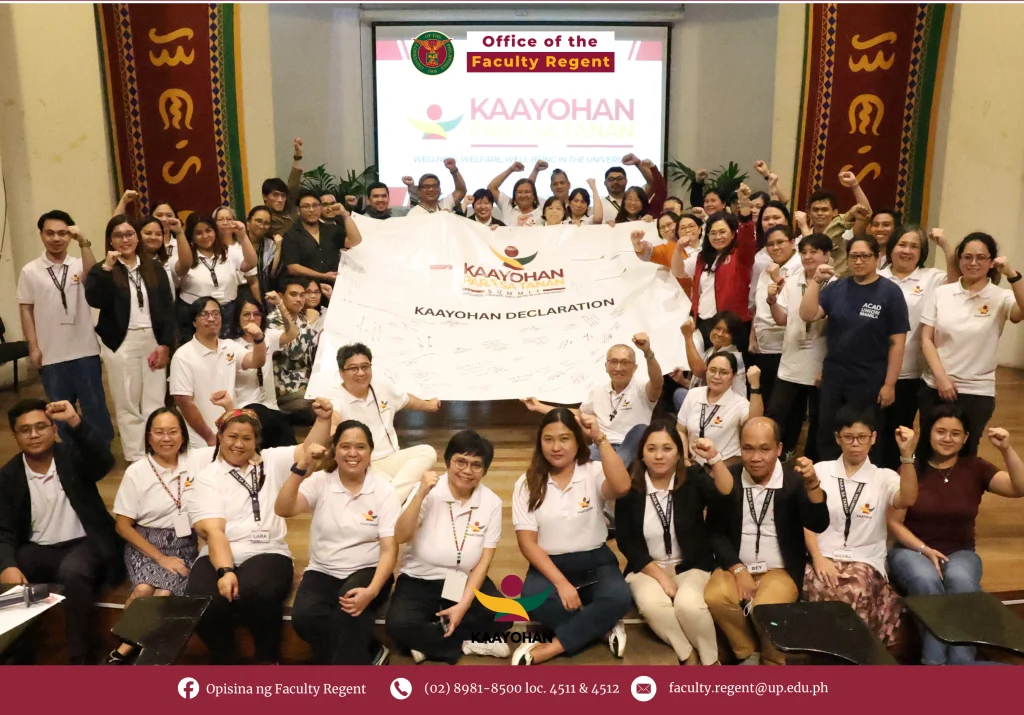
In order for the University of the Philippines (UP) to serve the people well, it has to ensure the wellness, welfare, and wellbeing of its own community. This, in essence, was one of the key messages that came out of the Kaayohan Summit on December 1-2, 2025 at the Melchor Hall Theater, College of Engineering, UP Diliman, Quezon City. Guided by the theme “Kaayohan para sa Tanan: Wellness, Welfare, and Well-being in the University,” the two-day event sought not only to articulate the challenges to well-being experienced by UP’s workforce but also to propose for policies that enable the community to better deliver its indispensable public service to the country. The summit brought together faculty, REPS, administrative staff, and contractual personnel from across the UP System. At the core of the summit was the Kaayohan framework adopted by the UP Office of the Faculty Regent, which emphasizes that honor, excellence, and service rest fundamentally on the well-being of its people. This framework recognizes that a university’s capacity to teach, conduct research, and deliver public service is inseparable from the conditions of its workers. The Summit identified some of the systemic issues faced by the UP community. These include heavy workloads, unclear or unfair promotion pathways, limited institutional support, mobility and housing issues, and persistent job insecurity undermine the university’s mission. By confronting these issues head-on, the summit aimed to advocate for a policy shift toward a healthier and more humane academic environment. The keynote address delivered by Dr. Paul Michael Hernandez of the UP Manila Healthy University Office highlighted the urgency of institutionalizing well-being. He urged the university community to advocate not only for better funding but also for structural commitments that protect worker welfare. Dr. Hernandez called for allocating five percent of UP’s annual budget to health and wellness — similar to the Gender and Development budget requirement. By linking well-being initiatives to systemic funding mechanisms, he emphasized the need for long-term solutions rather than piecemeal efforts. Challenges to well-being The plenary discussions, meanwhile, highlighted the various challenges that undermine the well-being of university personnel. In the first plenary session on wellness, speakers pointed to mental health concerns, unsafe spaces, physical accessibility issues, and the emotional toll of being overworked and undervalued. Prof. Ervina Espina of the UP Ugnayan ng Pahinungod said that there are some unsafe spaces in UP where a “culture of silence” exists. Meanwhile, Prof. Pat Carranza, a mobility advocate and head of the UP College of Music’s Music Education Department, added that the lack of reliable transportation within UP Diliman creates daily hardships, especially for those with mobility concerns. Job insecurity among Job Order/Contract of Service (JO/COS) or contractual workers has been a central concern among the university workforce, said Anna Cruz of the Alliance of Contractual Employees in UP (ACE UP). She emphasized that these employees, who perform essential roles yet lack job stability, must be fully included in the university’s wellness planning. Dr. Shelley Ann Dela Vega added preventive care also needs to be on top of the wellness agenda. She reminded delegates that institutional support for early health interventions can significantly improve long-term outcomes for employees. The role of institutional support in well-being The second plenary discussions during the first day focused on institutional support for welfare. The discussions revealed substantial gaps in career development, compensation, and benefits. Ms. Perlita Raña, national president of the All-UP Academic Employees’ Union (AUPAEU), critiqued the current salary system, asserting that there seems to be a disconnect between employees’ growing expertise and their stagnant pay levels. Staff Regent-elect Rey Espanto, meanwhile, commented that equity remains uneven across constituent universities, urging UP to standardize benefits under the principle of “One UP.” Two UP System officials shared updates on the Angelo Jimenez administration’s efforts to address wellness concerns. Assistant Vice President for Administration Prof. Richard Javier announced a UP-TESDA partnership for free capacity building, while Assistant Vice President for Academic Affairs Ian Kendrich Fontanilla discussed the Office of the Vice President for Academic Affairs’ grants and fellowships, among other things. Well-being and academic freedom During the second day, speakers participated in a plenary session focusing on the importance of academic freedom and how threats to academic freedom impact on the wellness, well-being and welfare of members of the UP community. Former Faculty Regent and UP Manila Prof. Carl Marc Ramota discussed efforts from the faculty community at defending academic freedom in UP in a climate of political repression and red-tagging. He noted the formation of the Committee for the Promotion of Academic Freedom and Human Rights in most Constituent Universities in UP as one of the important developments that need to be seen through in the next coming years. Professors Willy Alangui of UP Baguio and Regletto Imbong of UP Cebu discussed how faculty members and other UP community members in their own CUs faced the various challenges and threats to their exercise of academic freedom. Alangui asserted that academic freedom is of utmost importance in order to achieve Kaayohan. Imbong, meanwhile, cited former UP President Francisco Nemenzo, who said that academic freedom is for those who need it the most – the poor and marginalized sectors of Philippine society. Both emphasized the need for both collective action and solidarity with other sectors of Philippine society as crucial in asserting democratic rights. Ruby Anna Bernardo, national chair of the Alliance of Concerned Teachers (ACT), noted the larger context of the threats to academic freedom and human rights in the country. She gave various examples of how educators, both in the public and private sector, and in all levels, have asserted for salary increases and greater benefits but were targeted with reprisals. Bernardo also noted the successes achieved by such assertions. Synthesizing best practices, proposals Throughout the two-day summit, participants of the various UP CUs participated in workshop discussions in order to consolidate both the common issues they face and formulate proposals grounded in the Kaayohan framework. At the end of the summit’s second day, representatives from the
Statement of the Offices of the UP Sectoral Regents on the Co-Terminus with the Incumbent (CTI) Status of PGH Positions
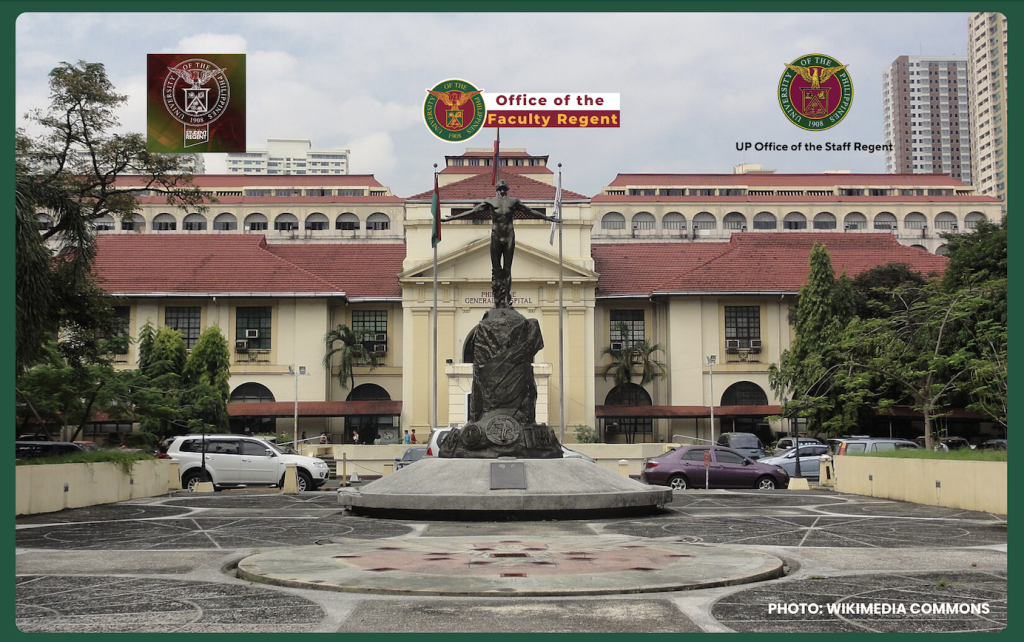
We express our grave concern regarding the reclassification of hundreds of plantilla positions at the Philippine General Hospital (PGH) into “Co-Terminus with the Incumbent” (CTI) status.This action, which was acted upon unilaterally by the PGH administration, poses a direct threat to the job security, professional growth, and morale of our essential hospital personnel. Among the most affected are utility workers, ward assistants, nursing aides, and other support staff indispensable to hospital operations. They are those in Salary Grades 1 to 4 who are the most vulnerable among our workforce.In a dialogue with the All UP Workers Union – Manila Chapter, PGH Director Dr. Gerardo Legaspi confirmed that the DBM had ordered 1,940 positions to be tagged as CTI. Without prior consultation, dialogue, or even notification with affected staff or the Union, the PGH administration submitted a counterproposal offering more than 400 positions for CTI conversion. This blatant disregard for due process directly violates the Collective Negotiation Agreement (CNA) between the University and the AUPWU.Under this plan, CTI status threatens our personnel’s job security, because once vacated, these positions will be abolished. PGH’s workforce will be reduced over time, jeopardizing not only current employees’ tenure and career progressions but also compromising hospital operations especially as PGH is expected to expand its services under Republic Act No. 12210.We assert that any significant change to PGH’s staffing structure must be immediately suspended and subjected to a thorough and transparent review. This is an issue that deserves attention within and beyond the UP Community, as PGH serves not only as a vital training ground for health professionals, but also as the country’s foremost public hospital, serving some of the most marginalized members of society. Thus, these decisions must, at the minimum, be discussed by the Board of Regents.We therefore call on the PGH administration to disclose all communications and documents related to the CTI directive and the submitted counterproposal. We urge them to respect the CNA and engage in genuine consultation with the AUPWU and other affected sectors. Disregarding the welfare of our workforce essentially undermines our mission of public service.We, your Staff Regent, Student Regent, and Faculty Regent, stand firmly in solidarity with PGH workers and all members of the University community in defending labor rights, democratic governance, and integrity in public service. Francesca Mariae M. Duran Student Regent Early Sol A. Gadong Faculty Regent Marie Theresa S. Alambra Staff Regent
Mensahe sa UP Manila School of Health Sciences – 1st SHS-Wide Recognition Rites

Maayong hapon sa inyo tanan. Magandang hapon po sa inyong lahat. Una kong nalaman ang tungkol sa UP Manila School of Health Sciences noong bahagi ako ng Academic Union at bago pa maging Faculty Regent. Sa tuwing pumupunta kami sa UP Tacloban ay sinisikap naming makapunta rin sa SHS Palo para makausap ang ating faculty at staff doon. Noong naging faculty regent na ako ay napuntahan ko rin sa wakas ang Baler, Koronadal, at Tarlac campuses. Sa ilang beses kong pagpunta ay dalawa ang laging tema ng aking mga nakikita’t naririnig: Sa isang banda, kailangang kailangan ng SHS ng suporta sa imprastruktura at pasilidad, gayundin ng dagdag na items at panahon para sa advanced studies at research ng ating mga kaguruan at kawani — matingkad pa sa aking alaala ang napakalaking butas sa bubong ng faculty room sa Palo, kung saan sobrang init kapag summer dahil hindi ito malagyan ng aircon, samantalang kailangan namang magpayong sa loob ng building tuwing tag-ulan. Halos ganito din ang sitwasyon sa Koronadal, kung saan naman kailangan pang magbenta ng mga guro ng kalamansi at kung ano pang bungang kahoy para may pambayad sa LBC at sa Baler, kung saan matagal ding natengga ang paggamit ng ilang kwarto at buildings na nasira ng bagyo. Higit na maayos ang imprastruktura sa Tarlac, pero kagaya ng mga guro sa ibang SHS campus ay kulang na kulang din sila ng pagkakataong mag-aral, mag-research, at mag-publish dahil sa kakulangan ng plantilla items at iba pang suporta. Ngunit sa kabilang banda, kahit laging may kirot sa aking puso ang pagbisita sa ating SHS campuses, lagi rin akong may baong tuwa pag-alis. Naikot ko na po ang lahat ng mga campuses ng UP sa buong bansa — mula Baguo, Cebu, at Mindanao — pero sa SHS campuses lang po may mga estudyanteng marunong bumati ng good morning o good afternoon. Sa SHS campuses din laging binibida ng mga guro ang accomplishments ng kanilang mga estudyanteng nagtop sa board exam, nagbalik upang magturo sa SHS, o marubdob na nagsisilbi sa kani-kanilang mga bayan. Lahat nang ito ay nakakamtan ng UP MANILA SCHOOL OF HEALTH SCIENCES kahit na limitado ang suporta sa kanila. Isipin niyo na lang kung ano pa ang maaabot ng modelong ito kung higit pa silang nabibigyan pansin at resources. Sinasabi ng iilan na nagbabago na ang mukha ng mga Iskolar ng Bayan — may twang na kapag nagsasalita, parking space na ang pino-problema, at mas pinipili na ang single origin handcrafted coffee imbes na mag-make tusok tusok ng kwek kwek at fish balls. Hayahay na rin daw ang mga estudyante ngayon, lalo pa’t may AI na, kaya higit nang marami ang mga may latin honors. Kung may marinig o mabasa man kayong nagsasabi nito, sana ay maimbitahan natin silang bumisita sa kahit aling SHS campus, para makita nila ang mga isko at iska na matatas sa paggamit ng sariling wika, kinakapos ng pambayad sa traysikel, at nabubuhay sa isang pakete ng noodles sa buong araw. Ipaalam natin natin sa kanila ang SHS campuses kung saan kahit walang numerical grades ay masigasig na nag-aaral ang mga estudyante at nangunguna sa mga licensure exams. Ipakilala natin sa kanila ang bawat mag-aaral sa SHS campuses na kailanma’y hindi mapapantayan ng artipisyal na kaalaman ang kaugaliang likas na mapagkalinga at mapagmalasakit. Sa Class of 2025, hihiramin ko lang ang sinabi ng isa sa mga guro niyo. Nagsimula kayo sa pandemya at ngayo’y magtatapos sa delubyo. Hindi naging madali ang bawat hakbang, ngunit kahapon ay nagsipagtapos kayo sa pambansang pamantasan. Ang bawat isa sa inyo ang matingkad na halimbawa ng paggamit ng galing nang may dangal sa paglilingkod bayan. Hangad kong may Return Service Agreement man o wala, lagi’t lagi sana kayong itutulak ng inyong puso na patuloy na magsilbi sa komunidad na higit na nangangailangan sa inyong husay at malasakit. Panginbulahan, Class of 2025! Padayon at magandang hapon pong muli sa inyong lahat! EARLY SOL A. GADONG 28th UP Faculty Regent 23 Hulyo 2025 Cine Adarna, UP Diliman
Pahayag ng UP Office of the Sectoral Regents sa ika-4 na State of the Nation Address ni Pangulong Marcos Jr.

Tiyak, larawan ng “pag-unlad” ang muling ipipinta ni Pang. Ferdinand Marcos Jr. sa kanyang pang-apat State of the Nation Address (SONA). Pero batid natin ang katotohanan: lalong nalulugmok sa matinding krisis sa ekonomiya, edukasyon, kalikasan, at karapatang pantao ang mga mamamayan. Maaaring ipagmamalaki niya ang diumano’y tagumpay sa negosasyon kay US Pres. Donald Trump: kkapiranggot na isang percentage point na pagbaba ng taripa kapalit ang mas maluwag na pagpasok ng mga produktong US sa bansa. Habang pinalalakas ang dayuhang kontrol sa ating ekonomiya, patuloy naman ang pagdurusa ng mga Pilipino sa pagtaas ng presyo ng bilihin at nananatiling di sapat ang kakarampot na dagdag-sahod, lalo pa’t laganap ang job insecurity. Sa halip na tugunan ang mga ugat ng kahirapan at kawalang-katarungan, patuloy ding binabawasan ang pondo para sa edukasyon at mga serbisyong panlipunan. At dahil hindi nito matugunan ang pangangailangan ng sambayanan, pinatitindi lang ni Marcos Jr. ang panunupil sa mga kritikal na tinig. Sa mga akademikong espasyo tulad ng UP, tumitindi ang mga atake sa akademikong kalayaan, pumapasok ang mga militar at pinagbabantaan ang mga guro, estudyante, at mananaliksik na lumalaban para sa kanilang mga karapatan. Samantala, sa kabila ng mga postura ng pagpapanagot sa nakaraang tiwaling administrasyong Duterte, lumalabas na wala itong masyadong interes o tulak na makamit ng bayan ang hustisya. Habang positibo ang pagkakasakdal kay dating Pang. Rodrigo Duterte sa International Criminal Court, binigo naman tayo ng Korte Suprema sa pagbabasura ng impeachment kay VP Sara Duterte. Sa desisyon nito, ipinagkait ng kataas-taasang korte ang pagkakataong mapanagot ang mga Duterte sa mga alegasyong paglustay sa pondo ng bayan. Ipinakikita nito ang kawalan ng hustisya sa bansa. Binibigo din tayo ng administrasyong Marcos Jr. sa pagharap sa krisis sa klima. Malinaw ito sa lantad na kawalan ng paghahanda ng gobyerno sa harap ng inaasahan nang matinding pagbaha sa Kamaynilaan na nagdulot ng pagkawala ng kabuhayan, bahay, at buhay ng maraming Pilipino. Sa harap ng lahat ng ito, nananawagan tayo sa komunidad ng UP at mga mamamayang Pilipino na tumindig para ihayag ang tunay na SONA, at igiit ang ating mga karapatan at kinabukasan sa harap ng kainutilan ng kasalukuyang mga nasa kapangyarihan. Partikular sa akademikong sektor, nananawagan tayong doblehin ang badyet ng edukasyon. Kailangang itaas na ang sahod ng mga guro’t kawani, kabilang ang pagtakda ng PhP36,000 na sahod para sa Salary Grade 1. Hiling din nating itaas ang Instructor 1 sa Salary Grade 16, at bigyan ang Teacher 1 ng minimum na PhP50,000 buwanang sahod. Hindi rin natin binibitiwan ang panawagan para sa de-kalidad at higit na aksesibleng mga pasilidad at serbisyo, gayundin ang pagpapabilis ng pag-apruba ng plantilla items at pagtigil ng kontraktwalisasyon sa ating mga kawani’t kaguruan. Ipaglalaban natin iyan dahil iyan ang nararapat at makatarungan. Presyo ibaba! Sahod itaas! Itigil ang red-tagging at paglabag ng karapatan at akademikong kalayaan! Marcos singilin! Duterte panagutin! Francesca Mariae M. Duran Student Regent Early Sol A. Gadong Faculty Regent Marie Theresa S. Alambra Staff Regent 28 Hulyo 2025
Nagkakaisang panawagan ng UP Sectoral Regents sa Araw ng Kasarinlan sa Pilipinas
Ngayong ginugunita natin ang ika-126 anibersaryo ng Araw ng Kalayaan, inaalala natin hindi lang ang kasaysayan ng paglaban sa dayuhang pananakop, kundi pati ang nagpapatuloy na tungkulin ng bawat mamamayan at institusyon na ipaglaban ang mabuting pamamahala at pananagutan sa ating gobyerno. Bilang mga kinatawan ng iba’t ibang sektor sa Unibersidad ng Pilipinas (UP), at bilang mga mamamayang naninindigan para sa isang tapat at makatarungang pamahalaan, mariin naming ipinapanawagan sa Senado ng Pilipinas na gampanan ang konstitusyonal nitong tungkulin bilang Impeachment Court kaugnay ng reklamong impeachment laban kay Pangalawang Pangulong Sara Duterte. Imoral, labag sa Saligang Batas, at di katanggap-tanggap ang naging hakbang ng Senado na ibalik sa Kamara ang reklamong impeachment. Obligasyon ng Senado na tipunin ang sarili bilang Impeachment Court at simulan ang paglilitis sa kaso, isang obligasyong nakaugat sa sistemang demokratiko at hindi maaaring talikuran. Hindi sapat ang pananahimik sa harap ng seryosong mga paratang ng katiwalian at maling paggamit ng pondo ng bayan, lalo na ng confidential funds ng Office of the Vice President at Department of Education. Ang ganitong klase ng pondo, na hindi dumaraan sa sapat na pagsusuri o oversight, ay matagal nang bulnerable sa abuso. Sa kaso ni Vice President Duterte, malinaw na may sapat na batayan para ituloy ang impeachment proceedings. Ang proseso ng impeachment ay isang mahalagang mekanismo ng checks and balances na itinatadhana ng Saligang Batas. Banta sa sistemang demokratiko ang anumang pagtatangkang iwasan, atrasan, o antalahin ang tungkuling ito ng Senado. Sa diwa ng Araw ng Kalayaan, hinihimok namin ang taumbayan na maging mapagbantay. Ang bawat sentimo ng kaban ng bayan ay nararapat lang na gamitin para sa kapakinabangan ng nakararami, hindi para sa kapangyarihan at kapritso ng iilan. Huwag nating hayaang makaiwas sa pananagutan ang mga lider na lumalabag sa tiwala ng taumbayan. Panagutin ang dapat panagutin! Ituloy ang impeachment proceedings! Francesca Mariae M. Duran UP Office of the Student Regent Early Sol A. Gadong Opisina ng Faculty Regent Marie Theresa G.S. AlambraOffice of the Staff Regent
Pahayag ng mga Opisina ng Sectoral Regents Hinggil sa Pag-aresto kay Dating Pangulong Duterte

Inaresto si dating Pangulong Rodrigo Duterte alas-9:20 ng umaga ng Marso 11, 2025, pagdating niya sa Maynila galing sa Hong Kong. Pormal nang isinampa ng Philippine Prosecutor General ang arrest warrant mula sa International Criminal Court (ICC) para sa mga kasong krimen laban sa sangkatauhan (crimes against humanity), na natanggap ng INTERPOL Manila kaninang umaga. Sa ngayon, nasa kustodiya siya ng PNP at iniulat na nasa maayos na kalusugan. Ang kaso laban kay Duterte ay batay sa kanyang pananagutan sa madugong giyera kontra droga mula 2016 hanggang 2022. Humantong ito sa libu-libong ekstrahudisyal na pamamaslang, at direktang resulta ng kanyang tuwirang utos at kabiguang panagutin ang mga salarin sa pamamaslang. Sa panahong ito ay mas lalo ding tumindi ang panunupil at brutalidad ng Estado, lalo na laban sa progresibong oposisyon. Sagad-sagaran din ang mga naging pag-atake sa kalayaang akademiko, at tinarget ang mga guro, propesor, estudyante at kawani na nagsalita laban sa mga katiwalian at abuso ng Estado. Sa ilalim ng Anti-Terrorism Act of 2020, naging legal ang pag-aresto nang walang mandamyento, pinalawig ang detensiyon, at pinatindi ang red-tagging sa mga aktibista, mamamahayag, at iba pang tumututol sa kanyang rehimen. Mahalagang hakbang ang pag-arestong ito kay Duterte para mabigyan ng hustisya ang libu-libong napaslang sa kanyang termino bilang pangulo at kung mapatunayan sa ICC na nagkasala siya’y dapat maparuhasan para hindi na matularan. Pero mahaba pa ang laban. Nananatili pa rin ang mga institusyong naging kasabwat sa kanyang mga krimen. Kakailanganin ang patuloy na pagmamatyag ng mga Pilipino, ang walang pagod na paglaban ng mga biktima at tagapagtanggol ng karapatan, at ang suporta ng pandaigdigang komunidad para matiyak ang hustisya para sa mga biktima at sa mga mamamayang Pilipino. #JusticeForEJKVictims #DefendAcadFreedom #StopTheKillings #EndImpunity Hon. Francesca Mariae M. Duran UP Student Regent Hon. Early Sol Gadong UP Faculty Regent Hon. Marie Theresa G.S. Alambra UP Staff Regent
Statement of the UP Office of the Faculty Regent on International Working Women’s Day
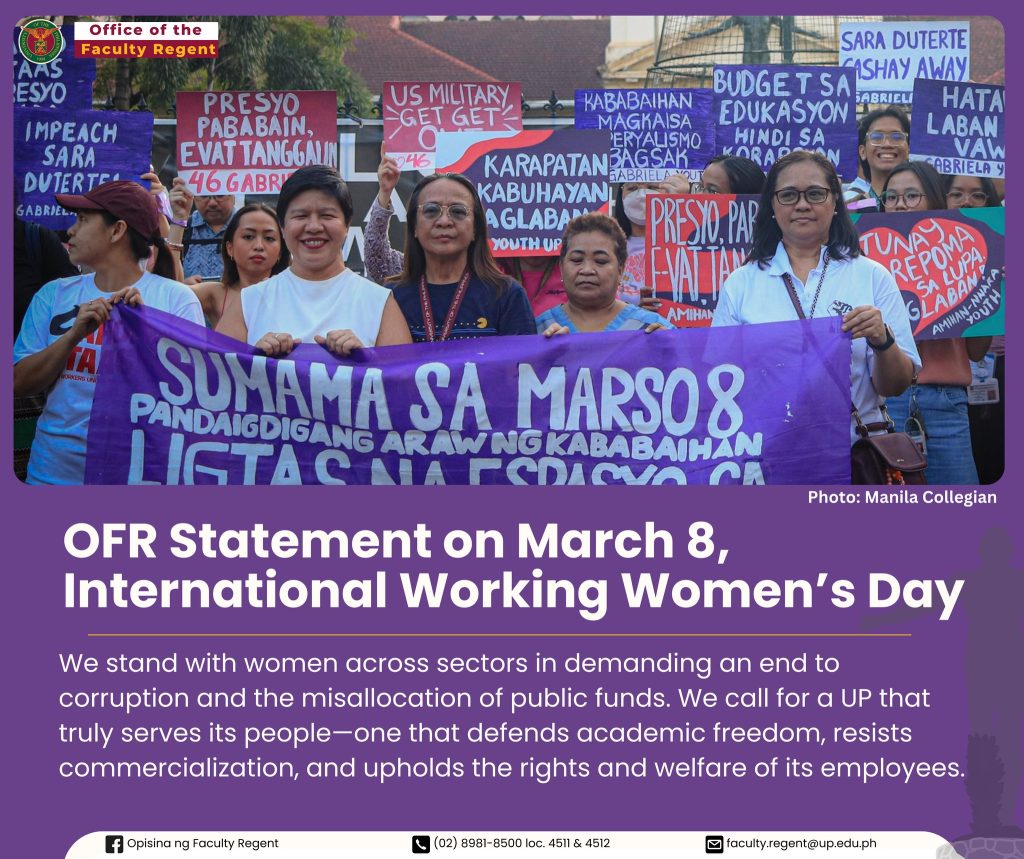
As we celebrate International Working Women’s Day, the UP Office of the Faculty Regent stands in solidarity with all working women, both within and beyond the University of the Philippines (UP) community. We recognize the truly immense contributions of women to our society and we acknowledge the persistent challenges that they face, as systemic issues of corruption and deepening inequality continue to exacerbate these concerns.Today, we highlight how corruption under the Marcos Jr. administration disproportionately affects ordinary citizens, and especially working women. When public funds are misused, women are the ones who bear the brunt of its consequences, because the diversion of public resources away from essential services such as education, health care, and social protection deprives women of the support they need to sustain their families and secure livelihood. Furthermore, the misuse of taxpayers’ money, from Vice President Sara Duterte’s questionable use of confidential funds to anomalous procurement deals to institutionalized patronage, robs working women of economic opportunities and access to quality public services.As we demand transparency and accountability in government, we must also turn our gaze inward to the struggles within our own university community. The University of the Philippines is not exempt from policies that threaten its mandate as the national university. There are the proposed revisions to the core curriculum that undermine the critical and holistic education as well as the creeping commercialization of university spaces that further marginalizes students and employees by prioritizing profit over accessibility and inclusivity. And, of course, the are the threats to academic freedom, including intensified red-tagging and political repression within our campuses that stifle intellectual dissent and diminish the democratic character of our university.Within UP, women employees including faculty members, research staff, administrative personnel, and rank-and-file workers have long called for institutional reforms that uphold their welfare and well-being. Low and delayed wages, inadequate benefits, and the persistent problem of contractualization within the university workforce exacerbate gender disparities. Meanwhile, the lack of support for mental health services and institutional responses to workplace harassment continue to burden women in academia and university service. Personnel and students from the LGBTQIA+ community face similar struggles, as they still need to go the distance to have their basic rights respected.It is only right that we commemorate the struggles of working women, honor their strength, their labor, and their unwavering resolve to fight for a better future. We also reaffirm our commitment to the fight for a just and equitable society, and we stand with women across sectors in demanding an end to corruption and the misallocation of public funds. We call for a UP that truly serves its people—one that defends academic freedom, resists commercialization, and upholds the rights and welfare of its employees.End the plunder of public resources! Uphold academic freedom! Protect the rights and welfare of women workers! Hon. Early Sol A. Gadong Faculty Regent, UP System
Ikot Unyon x KAAYOHAN at BATAYAN sa Basic Education Faculty sa UP Visayas

Magkasunod na idinaos nitong Marso 12, 2025 ang bahagi ng seryeng Ikot Unyon x KAAYOHAN (Kausap, Payo, at Huntahan) at BATAYAN: Pagbabalita’t Talakayan tungo sa Kaayohan ng Basic Ed Faculty sa UP Visayas sa pangunguna ng Opisina ng Faculty Regent at ng All UP Academic Employees Union – Iloilo Chapter. Kasama sa mga dumalo ang mga faculty, REPS. at admin staff ng UPV at gayundin sina Chancellor Clement Camposano, VCA Farisal Bagsit, OIC VCAA Eric Rizo, Acad Union NEB VP for Faculty Rommel Rodriguez, UPHSI Principal Edelia Braga, ACT Region 6 representative Max Montero, at ang mga opisyal ng Acad Union Iloilo. Tinalakay sa dalawang pagtitipon ang mga isyung pang-akademiko at pang-kaayusan kabilang na ang UP Core Curriculum, Faculty Merit Promotion, pagapapalawak ng eHOPE provisions, paggamit ng certificate of service imbes na bundy clock ng mga nagbibigay ng guidance services, harmonization ng promotion at curriculum ng mga UP BEUs, union representation sa mga komite, at iba pa. Tunguhin ng pag-iikot na ito ni Faculty Regent Early Sol Gadong ang regular at tuloy-tuloy na pagkalap ng impormasyon hinggil sa mga kinakaharap na mga danas at suliranin ng mga guro at kawani ng pamantasan upang lalong maging epektibong kinatawan ng sektor ng kaguruan sa Lupon ng mga Rehente. #KaayohanParaSaTanan
OFR Statement on the 39th Anniversary of 1986 EDSA People Power Uprising
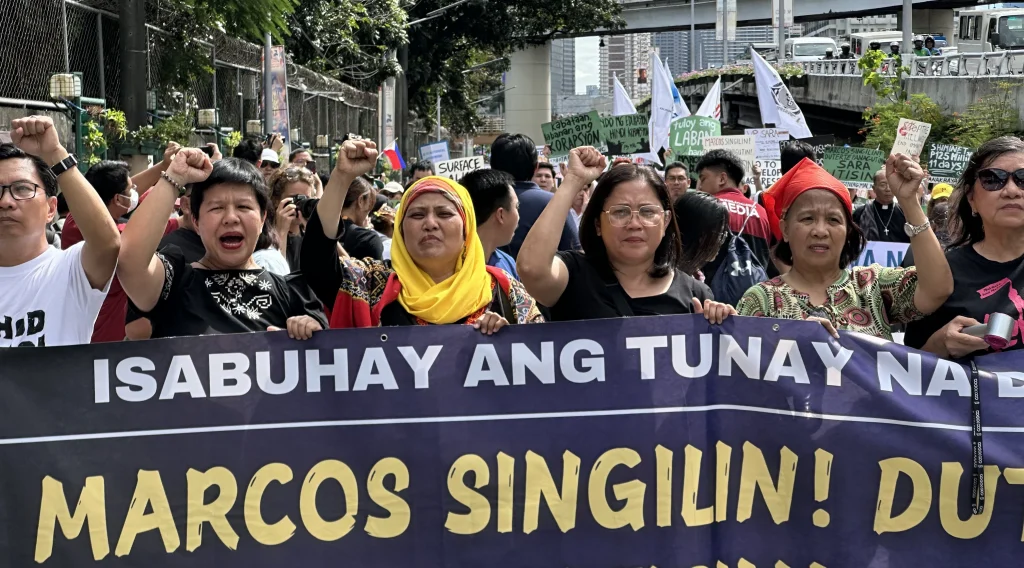
The Office of the Faculty Regent (OFR) of the University of the Philippines (UP) System joins the UP community and the entire country in commemorating the 39th anniversary of the EDSA People Power uprising. On this day, we remember that moment in history when the Filipino people stood up and bravely faced and defeated the tyranny of the Marcos Sr. dictatorship.We take part in the commemoration in part to honor the immense sacrifices made by members of our UP community and countless Filipinos who participated in the active resistance against the dictatorship for two decades. Many of them paid the ultimate price with their lives. Their legacy of selfless sacrifice and nationalism moves us to carry on with our struggle for justice and peace, and commitment to public service.We wish to acknowledge the decision of UP President Angelo A. Jimenez to declare February 25 as Alternative Learning Day in recognition of the historic 1986 People Power uprising. This declaration allows us to fulfill our collective duty to #NeverForget the inequities of the dictatorship and tyrannical rule, while providing us a crucial space for critical reflection and learning.We also understand why some members of our faculty body have expressed that UP should have taken a more progressive stand—similar to other universities that suspended work and classes—and that it could have been declared more promptly. We now move forward and take appropriate action to uphold the true spirit of the 1986 uprising. We must stand united against any attempt to revise history, normalize impunity, or erode public accountability.Our faculty members are crucial in shaping the minds of the youth who in turn will shape the future of the nation. We enjoin them to exercise their right to assemble, speak out, and express collective indignation against corruption, historical distortion, and the ongoing neglect of social services including education. We urge members of our community to participate in the multiple protest actions happening across the country today and resist efforts to silence or diminish the lessons of our past.Today is an opportunity for both commemoration and engagement. Let us make sure that progressive learning and critical thinking extend beyond our classrooms. By doing this, we honor the sacrifices of those who fought for freedom and reaffirm our commitment to a society that upholds good governance, justice, and accountability.Mabuhay ang diwa ng EDSA!#ResistTyranny#DefendAcademicFreedomHon. Early Sol A. GadongFaculty Regent, UP System
Faculty Regent holds consultation with UP Diliman basic education faculty on job security, well-being
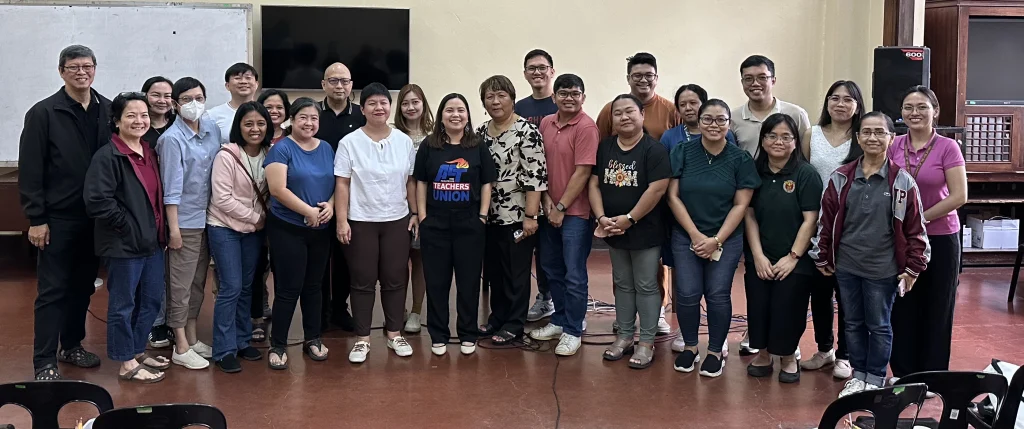
The UP Office of the Faculty Regent (OFR) convened faculty members from the University of the Philippines Integrated School (UPIS) and the UP College of Education for a crucial discussion on their working conditions and welfare. Titled “BATAYAN: Pagbabalita’t Talakayan tungo sa Kaayohan ng UP Basic Education Faculty,” the consultation took place on February 10, 2025, at Room 108, Benitez Hall, UP Diliman, Quezon City. The dialogue underscored the mounting challenges faced by basic education (BE) faculty, including excessive workloads, the rise of contractual employment, and the persistent lack of plantilla (permanent) positions. Participants voiced concerns over job security, economic stability, and the need for stronger academic freedom and democratic governance within the university. Ruby Ana Bernardo, president of the Alliance of Concerned Teachers (ACT) Union-NCR, provided insight into the dire situation of BE teachers across the National Capital Region, highlighting their parallel struggles with UP educators—from work overload and inadequate compensation to the fight for job security. Bernardo also shed light on the alarming cases of red-tagging and vilification faced by ACT Union leaders and members who assert their rights. Despite these threats, the union has made significant strides, successfully negotiating a collective negotiation agreement (CNA) with the Department of Education (DepEd) to uphold the rights and welfare of public school teachers. UP Faculty Regent Early Sol Gadong shared the issues and resolutions raised during the Basic Education Summit held last year and, with Teacher Katrina Paula Ortega, director-at-large of the All UP Academic Employees Union, detailed the specific hardships confronting UPIS faculty, including: Academic Burdens. Heavy workloads, sluggish hiring processes, high attrition rates, and the absence of clear policies on teaching load credits, especially regarding research expectations. Faculty Well-being. Lack of mental health support and inadequate workplace conditions that exacerbate the mental toll of overwork. Economic Security. Delayed salary releases for newly hired faculty and the urgent need for additional benefits such as shuttle services and housing support. Academic Freedom and Governance. Calls for the establishment of a system-wide Committee on the Promotion and Protection of Academic Freedom and Human Rights, alongside demands for greater transparency and democratic governance, and protection of academic freedom in UP’s basic education units. Ortega also outlined the Academic Union’s efforts to address these concerns and mobilize faculty members to collectively push for systemic reforms at the local, university, and national levels. The discussion extended to broader issues, such as inconsistencies in crediting systems across UP’s four BE units and concerns over the standardization of quality assurance evaluations. UPIS teachers expressed willingness to sustain the dialogue and strengthen collective efforts to implement resolutions and push for meaningful reforms. Faculty Regent Gadong stressed that real, lasting improvements in faculty welfare and institutional policies can only be achieved through sustained, organized action. The consultation closed with a strong call for unity and continued advocacy to secure the rights and well-being of UP’s basic education faculty.